
 About
About MYINVEST
Training and Education
It's time...
Why this training field is necessary.
I am often asked whether I pass on my concepts in the form of training or integration into existing professional practice.
The short answer: Yes, that is planned– and it feels urgent.
Looking at current healthcare and support structures, it is difficult to imagine how sustainable work with dependents and their environments can reach everyone who needs it. Access is often restricted, pathways are long and bureaucratic, and many people fall through the cracks because they are not considered “ill enough” for existing programs.
At the same time, the number of affected individuals is likely to multiply in the coming years due to societal disruptions and changing detection structures. Simply doing “more of the same” will not be sufficient.
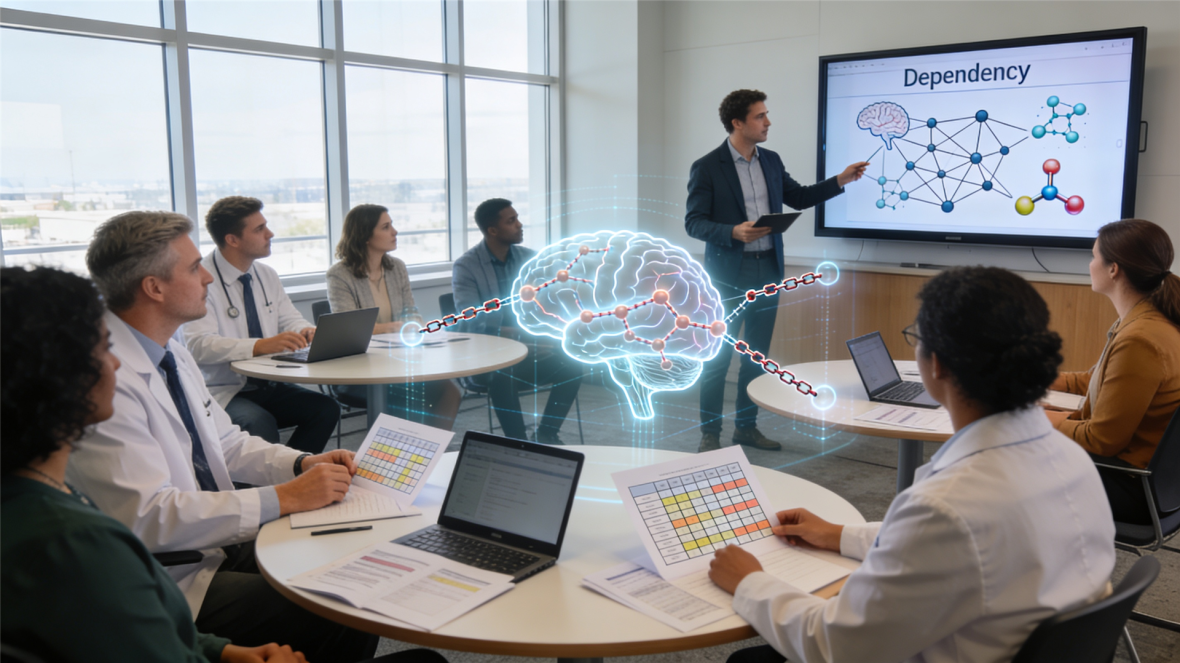
What this training is about
Together with experts from multiple disciplines – medicine, psychology, philosophy, and secularized spirituality – I am working on concepts for a solid training or further education track.
Core principles:
→ Interdisciplinary
Combining the most effective elements from different fields instead of defending disciplinary borders.
→ Evidence‑informed
Grounded in neuroscience, behavioral economics, and systems theory, not in fashionable buzzwords.
→ Ethically constrained
No indoctrination, no cultivation of dependency on the trainer; the aim is to strengthen professional autonomy.
→ Practically applicable
Methods and tools that can be integrated into existing practices and institutions under real‑world constraints.
The goal is to forge “the best of several worlds” into a coherent method that improves outcomes without violating regulatory frameworks.
Target group
This training is designed for professionals who already work with complex human systems, including but not limited to:
→ coaches and counsellors in the field of performance, transition, or recovery,
→ therapists and psychologists,
→ physicians and allied medical professionals,
→ leaders and practitioners in organisations who deal with human capital, health, and risk structures.
It is not a replacement for medical or psychotherapeutic training, but a complementary field that:
→ deepens systemic understanding of dependencies,
→ offers concrete tools for mapping patterns and interventions,
→ and sharpens ethical boundaries in high‑vulnerability contexts.
An overview of my own formal education and credentials can be found in the Credentials section of this site.
On spiritual and meditative elements
In the spiritual sector – in a secular, evidence‑aware sense– I am working with leading experts on the question of how “transformation meditations” and related practices can be secularized and integrated responsibly.
Where such elements are included in the training, they will:
→ be framed as ways of preparing one’s own cognitive space,
→ emphasize awareness and self‑reflection rather than absorption into someone else’s worldview,
→ avoid any form of indoctrination or concealed belief transfer.
Meditation, in this context, is not about entering a fully furnished living room built by someone else.
It is about furnishing your own cognitive space in a way that increases clarity and autonomy.
Status and next steps
This training field is in development.
The regulatory landscape, institutional needs, and practical realities mean that:
→ some elements will likely appear first as modular workshops or advanced seminars,
→ others may emerge as certified programs in cooperation with partner institutions.
As work progresses, this site will be updated with concrete formats, prerequisites, and participation options.